
We believe that transforming rainfed agriculture requires strategic, sustained, and collaborative support. Our approach is built on the understanding that networks multiply impact—when diverse stakeholders come together, their collective action can drive systemic change. The RRA Network was formed in 2007 to bring together farmers, civil society groups, researchers, and policymakers to address the real needs of dryland (rainfed) farmers.
Thematic working groups on seeds, millets, livestock, cropping systems, and markets have become platforms to co-learn and develop new ideas. Partnerships with other networks—like WGWLO, FOLU, RCRC, and MAKAAM—have further enriched our collective knowledge and reach. The NCNF (National Coalition of Natural farming) & IBBN (Indian Biochar and Bioresource Network) are examples of how shared learning has led to new initiatives.
Strength of a network is in its shared leadership and responsibility. Over the time, the network has grown bigger with more than 800 members across 12 states in India. In 2023, the creation of the RRA Foundation gave the Network an institutional base for long-term sustainability.
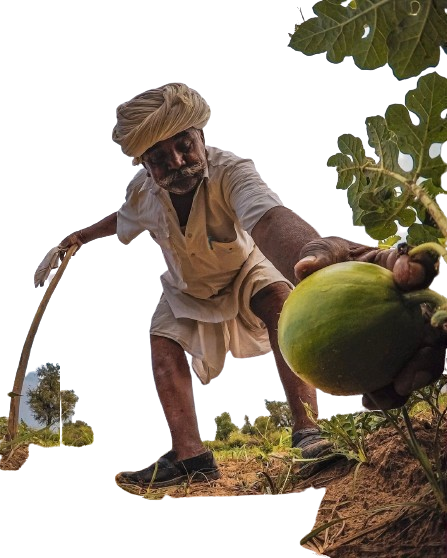
The Network has shaped bigger agendas—like mainstreaming millets, securing recognition for pastoralists in the 2024 Livestock Census, and developing community managed seed systems.
The Network tested new ideas on seeds, crops, livestock, and markets through pilots and partnerships. These efforts influenced the 12th Five Year Plan, supported millet procurement by states, and set standards for traditional seed varieties.
The Network’s work in states such as Maharashtra, Himachal Pradesh, Karnataka, and regions such as Bundelkhand, Manbhum, Tribal Tri-junction of Rajasthan, Madhya Pradesh and Gujarat have shown how local organisations and communities can anchor development in their own contexts. Women and youth leaders have played an important role in making these efforts more relevant and sustainable.
Given the complexities of rainfed agriculture, experiences from RRA Network members’ work have shown that a one-size-fits-all approach does not work for these landscapes. Solutions need to be landscape-specific, embedded in local contexts, yet contributing to broader systemic transformation. Over the years, the network has documented and implemented diverse models, guided by principles of local ownership, decentralization, ecological sustainability, and community participation.
Examples include community-managed seed systems that ensure local seed security, decentralized approaches for millet revival that integrate production, processing, and nutrition, backyard poultry systems that enhance livelihoods and nutrition, and extensive livestock care systems that strengthen resilience.
Building on this experience, the RRA Foundation aims to sustain and scale these efforts, supporting network members to generate evidence, develop new pilots, and test context-specific solutions that strengthen rainfed agriculture, promote resilient livelihoods, and inform broader policy and practice.
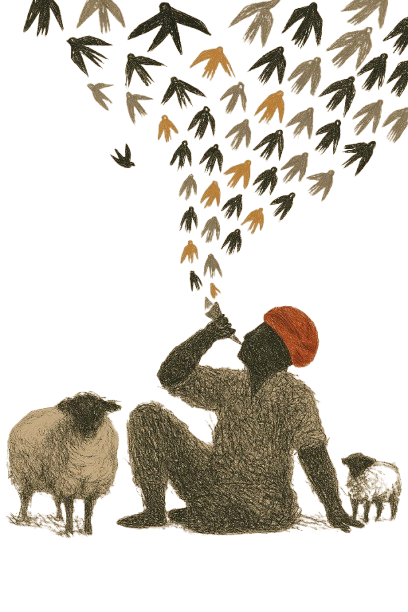
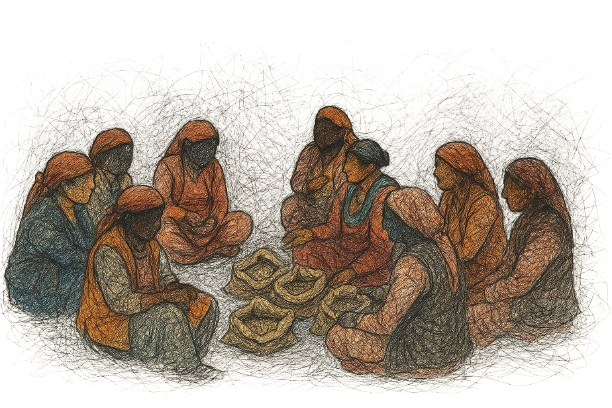
Drawing from the RRA Network’s extensive experience, this portfolio focuses on strengthening the ecosystem of collaboration across the network’s diverse constituents. Over the years, the network has evolved multiple layers—state chapters, regional chapters, and thematic working groups—each playing a unique role.
State chapters, currently active in Maharashtra and Himachal Pradesh, work to influence state-level policy, foster synergies among organizations, and create platforms to share experiences and demonstrate replicable models. Regional chapters focus on landscape-level challenges in highly vulnerable areas such as Bundelkhand, Manbhum, and the tribal tri-junction of Rajasthan, Gujarat, and Madhya Pradesh, aiming to generate evidence through collaboration among expert organizations.
Thematic working groups, including seeds systems, millet cropping systems, extensive livestock, markets, and institutions, bring together specialized experts who help evolve replicable frameworks, strengthen capacities of network members, and integrate evidence into ongoing programs.
Building on this structure, the RRA Foundation seeks to sustain and expand the work of these constituents, supporting the network to co-create, coordinate, and scale interventions that advance the revival and resilience of rainfed agriculture.
Given the vast scale and diversity of rainfed agriculture in India, achieving systemic impact requires policy action informed by grounded evidence. This portfolio focuses on translating grassroots experiences into actionable insights for policy and practice. Building on RRA Network’s experience, the RRA Foundation supports alternative research, documentation of traditional practices, and collaborative studies that capture locally relevant innovations. Many non-financial collaborations between network members and formal agricultural institutions have already demonstrated how such partnerships can generate robust, field-grounded evidence. By strengthening these efforts, the Foundation aims to ensure that policy and decision-making processes are shaped by community-validated solutions, enabling scalable interventions that addresses the challenges of rainfed agriculture.

Address- 1851-SF, VAKIL BUILDING, OPP. R C HIGH SCHOOL, MIRZAPUR ROAD,District Court, Ahmedabad, Gujarat, India, 380001
Contact details – admin@rainfedfoundation.org
Address- 1851-SF, VAKIL BUILDING, OPP. R C HIGH SCHOOL, MIRZAPUR ROAD,District Court, Ahmedabad, Gujarat, India, 380001
Contact details – admin@rainfedfoundation.org